Containerized Data Center vs. Traditional Data Center: What Is the Difference?
Keywords: containerized data center, traditional data center, modular data center
Author: longXing Team
Introduction
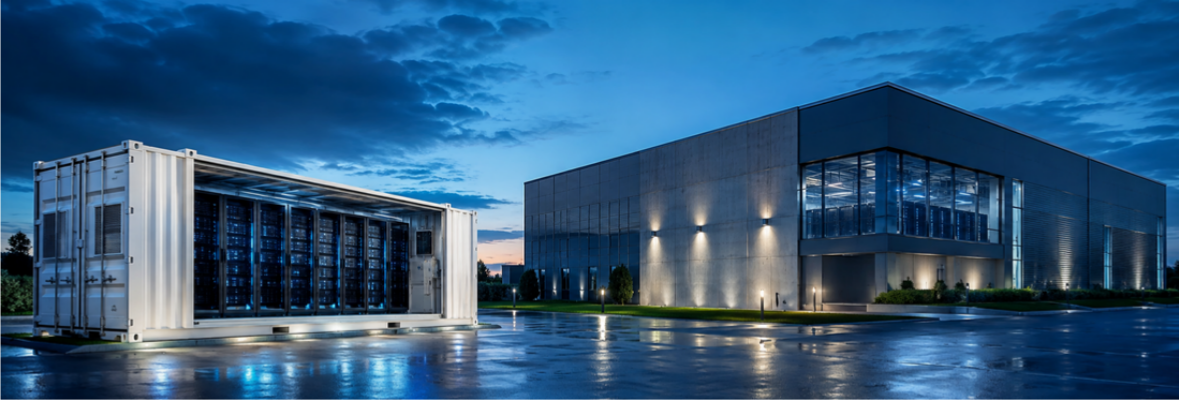
A containerized data center packages IT racks, power distribution, cooling, fire protection, security, and monitoring into a transportable enclosure. A traditional data center installs the same essential functions inside a permanent building designed or adapted for IT operations. Both can support reliable computing, but they differ in how capacity is planned, built, delivered, and expanded. The better choice depends on deployment speed, scale, site conditions, customization, and long-term growth.
Key Differences at a Glance
Construction and Deployment
Containerized systems are largely assembled, integrated, and tested in a factory while foundations, utilities, and network connections are prepared on site. This parallel workflow can shorten schedules and reduce the amount of specialist labor required at the destination. A traditional facility follows a more sequential construction process that includes civil works, building services, equipment installation, integration, and commissioning. It normally offers greater architectural freedom, but the project has more interfaces to coordinate.
Scalability and Capacity Planning
A containerized data center supports a pay-as-you-grow strategy. Organizations can deploy one module for an immediate requirement and add standardized power, cooling, or IT modules as demand increases. This approach limits stranded capacity when future load is uncertain. Traditional facilities usually deliver larger blocks of capacity at once. They may be easier to optimize for a stable, campus-scale requirement, although later expansion can involve disruptive structural or infrastructure work.
Customization and Space Efficiency
The physical dimensions and transport limits of a container constrain aisle width, equipment access, rack arrangement, and some cooling choices. Standardization improves repeatability but may restrict unusual layouts. A purpose-built data center can accommodate broad service corridors, specialized security zones, offices, storage, and highly customized mechanical systems. However, that flexibility adds design time and can increase cost variability.
Cost, Reliability, and Operations
Understanding the Cost Model
Containerization does not automatically mean a lower purchase price. Its strongest financial advantages are schedule predictability, repeatable engineering, reduced on-site work, and the ability to defer capacity. Buyers must still budget for land, foundations, utility interconnection, generators, network links, transport, cranes, permits, and commissioning. Traditional construction can be economical at very large scale, especially when the site and design will be used for many years. Total cost of ownership should include energy, maintenance, staffing, expansion, and eventual relocation or decommissioning.
Availability Is an Architecture Decision
Either format can use N, N+1, or 2N power and cooling architectures. Reliability depends on component quality, fault isolation, controls, commissioning, maintenance, and operational discipline—not on the enclosure alone. A factory-integrated module can reduce installation variation, while a conventional facility may provide more physical separation between redundant systems. Requirements should be mapped to business risk and, where relevant, an independent Tier objective.
Which Option Should You Choose?
Choose a containerized data center when rapid deployment, repeatability, portability, remote-site installation, edge capacity, or phased investment matters most. It is also useful as temporary capacity during renovation or recovery. Choose a traditional data center when the requirement is very large and stable, the facility needs extensive customization, or long-term campus integration outweighs speed.
A Practical Decision Rule
Compare the alternatives using the same IT load, redundancy target, climate assumptions, utility scope, and service life. Ask suppliers for a complete boundary-of-scope statement and a tested expansion plan. The right answer is not container versus building in isolation; it is the delivery model that meets the required capacity, availability, schedule, and lifecycle cost with the least unmanaged risk.
Questions to Ask Before Procurement
Confirm who owns design approval, permits, utility studies, transport, unloading, site integration, and post-installation service. Request the module’s tested operating envelope, maximum rack density, sound level, fire strategy, and expansion interfaces. Review factory and site acceptance procedures before placing the order. Finally, compare warranties and spare-parts availability at the deployment location. These questions expose costs and schedule dependencies that a simple equipment price cannot show. They also clarify whether local technicians can maintain the solution throughout its intended service life.


