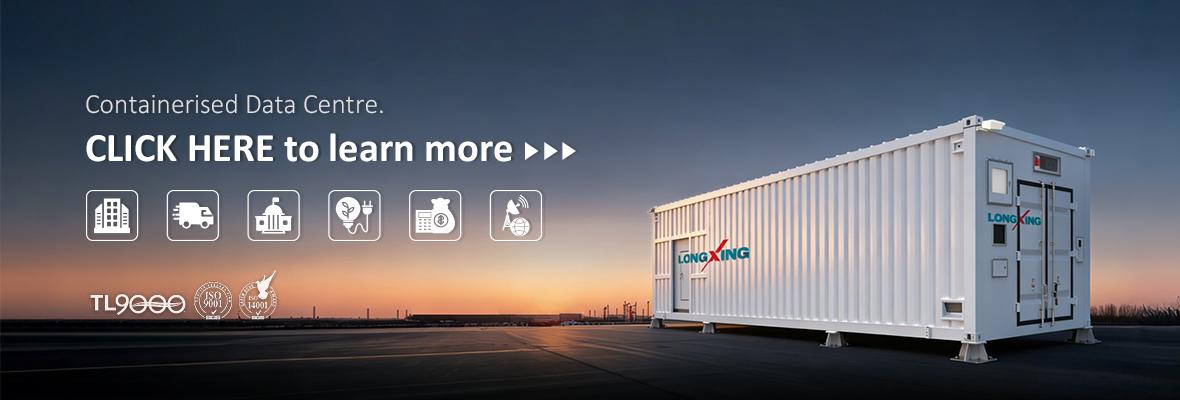
How Prefabricated Container Data Centers Achieve 72-Hour Deployment?

When it comes to data centers, many people still think of them as massive construction projects: digging foundations, building server rooms, laying cables, and installing equipment—a process that takes anywhere from six months to a year or two. However, prefabricated container data centers have completely revolutionized this model. The core concept is simple: transform the data center from an “on-site project” into a “factory-made product.” By shifting 85% to 90% of the construction work to the factory, on-site operations are reduced to “final assembly,” enabling rapid deployment. Core Design: Highly Integrated, Fully Prefabricated Systems (90% of Work Completed in the Factory).
1. Integrated Enclosure and Functional Integration
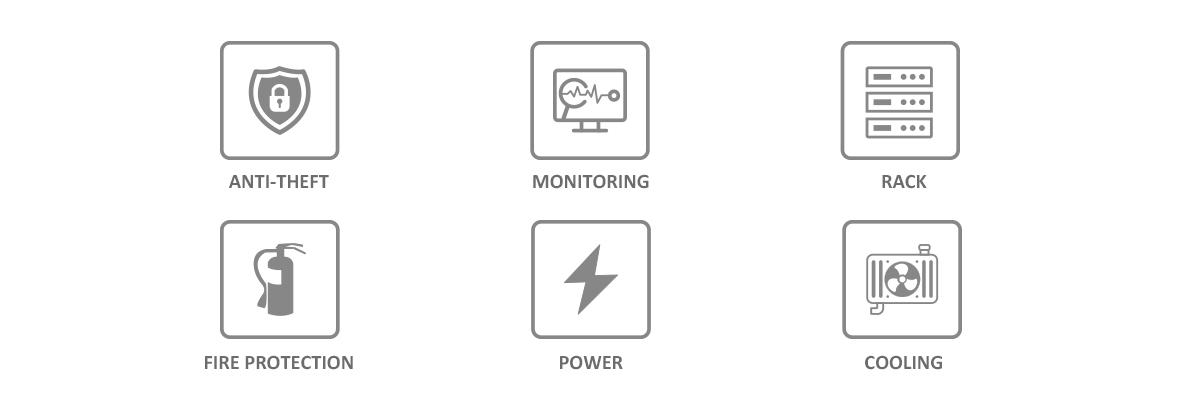
The enclosure itself features an integrated design combining steel construction, thermal insulation, shielding, and waterproofing, with an IP55/IP65 protection rating, enabling it to withstand various complex environments such as outdoor and remote locations. The enclosure is fully equipped with all essential components: IT racks, power distribution equipment, UPS/lithium batteries, cooling systems, fire suppression equipment, structured cabling, and environmental monitoring systems. All systems required for a data center are pre-installed in the factory according to design drawings in a single, seamless process. Even the finer details—such as hot/cold aisle containment, liquid-cooling/air-cooling piping, and cable tray grounding—are fully welded, installed, and tested in-house, thereby avoiding the chaos and rework associated with on-site construction.
2. The “Three Pre” Standards: Pre-integration, Pre-assembly, and Pre-testing
This is the key to ensuring “factory-ready compliance.” Pre-integration means that all equipment, cables, and piping are installed in a single operation with no omissions; pre-assembly involves pre-installing equipment such as cabinets, UPS units, and air conditioning systems in groups to reduce on-site wiring work; most crucially, pre-testing involves comprehensive end-to-end integration testing of power supply, cooling, fire protection, and monitoring systems prior to shipment, ensuring that the entire enclosure functions as a “fully qualified unit” that requires no complex on-site commissioning upon arrival.
3. Modular Decoupling: Building-block style assembly, plug-and-play
The entire data center is divided into standard modules such as IT computing modules, power modules, cooling modules, and monitoring modules. Each module features standardized blind-plug/quick-connect interfaces for power, networking, cooling water, fire protection, and monitoring. Just like building blocks, multiple modules can be connected side-by-side or stacked vertically, enabling the system to meet both small-scale computing needs and the rapid deployment of large-scale clusters.
Up and Running in 72 Hours: Streamlined On-Site Process (3-Day Breakdown)
Day 1: Site Preparation + Container Installation (8–12 hours).
Site: Paved surface / Simple concrete foundation (no complex civil engineering required).
Installation: Lift and position the entire container into place; secure with bolts and level it.
Pre-install external utilities: Reserve connections for mains power, fiber optics, cooling water, and fire protection.
Day 2: System Integration + Power and Water Connection (12–18 hours)
Power: Connected to mains power or diesel generator; quick-connect ports establish a single connection; UPS switches automatically.
Network: Direct connection via standard fiber-optic or copper ports; plug-and-play.
Cooling: Quick-connect flanges for cooling water and refrigerant lines; automatic filling and self-testing.
Fire Safety / Monitoring: Unified bus connection; automatic registration.
Day 3: Full-system integration testing + Computing power deployment (12–24 hours)
Power Supply and Distribution: Automatic verification of voltage, frequency, and redundancy.
Cooling: Closed-loop automatic regulation of temperature, humidity, and airflow.
Monitoring: Launch of 3D visualization for environmental conditions, security, energy consumption, and assets.
IT Equipment: Server power-up, network connectivity, business deployment; computing power available.
Traditional vs. Prefabricated: Key Differences
To provide a clearer understanding of the advantages of prefabricated container data centers, we’ve created a simple comparison to highlight the key differences between them and traditional data centers:
| Section | Traditional data center | Prefabricated Container Data Center |
| Construction Period | 12–24 months | 4–8 weeks in-house + 72 hours on-site |
| Prefabrication rate | 10–20% | 85–90% (completed in the factory) |
| On-site workload | Civil engineering/Installation/ Commissioning | Hoisting + 3 Utilities (Electricity, Network, Water) |
| Interface | Non-standard/multi-vendor/complex | Unified standard with quick-plug blind-mate connection |
| Deployment risk | Multiple debugging sessions frequent malfunctions | 100% factory-tested first-time launch success rate >99% |
Applicable Scenarios
The “rapid deployment” advantage of prefabricated container data centers makes them the top choice in many scenarios, particularly those with urgent requirements for computing power deployment:
1. AI Computing/Large Models: When enterprises face sudden spikes in computing demand and need to quickly set up computing clusters to support model training, prefabricated containers can step in immediately, preventing project delays caused by insufficient computing power;
2. Edge Computing: In scenarios where traditional data centers cannot be built quickly—such as factories, mines, substations, and remote areas—prefabricated container solutions can be rapidly deployed to enable edge data processing and computing support;
3. Emergency Response/Disaster Recovery: Following disasters such as earthquakes or floods, or when temporary computing power is needed for trade shows or short-term projects, the 72-hour rapid deployment capability can quickly provide emergency computing resources to ensure business continuity;
4. Scaling/Phased Deployment: When existing data centers lack sufficient computing power, there is no need for large-scale renovations. Simply add prefabricated container modules for modular scaling, increasing computing power on demand to reduce construction costs and timeframes.